SNAP help center
SNAP Guides
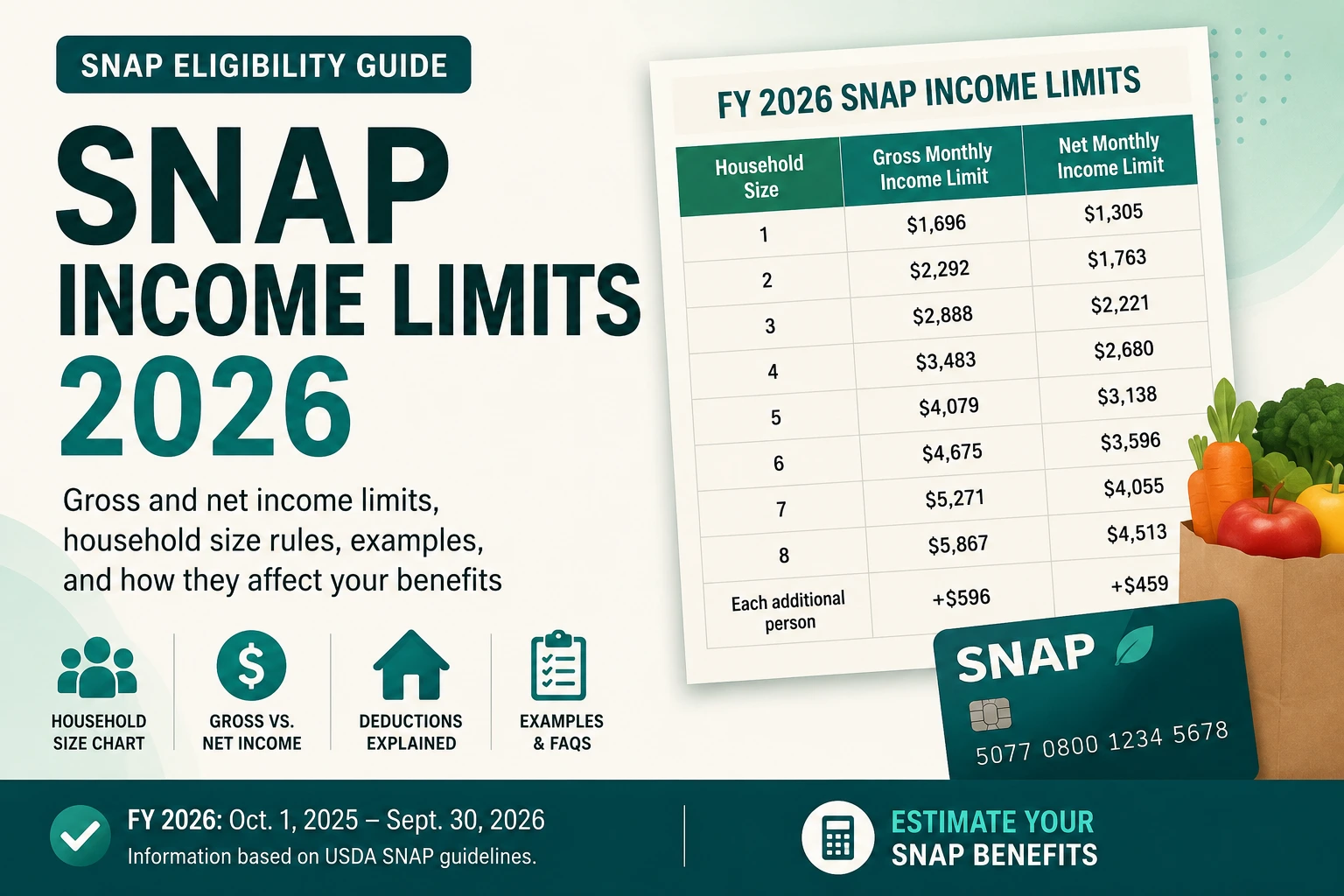
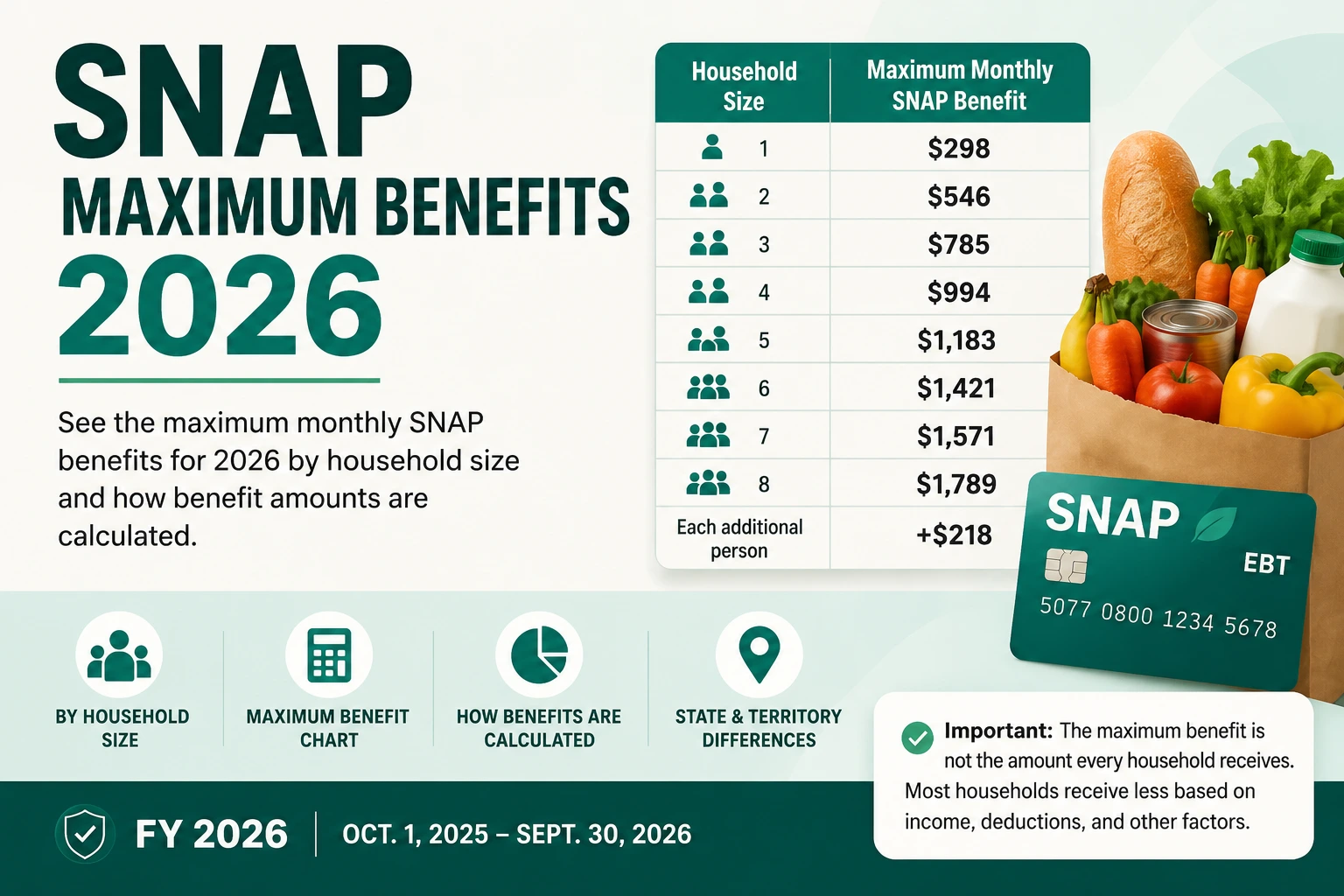
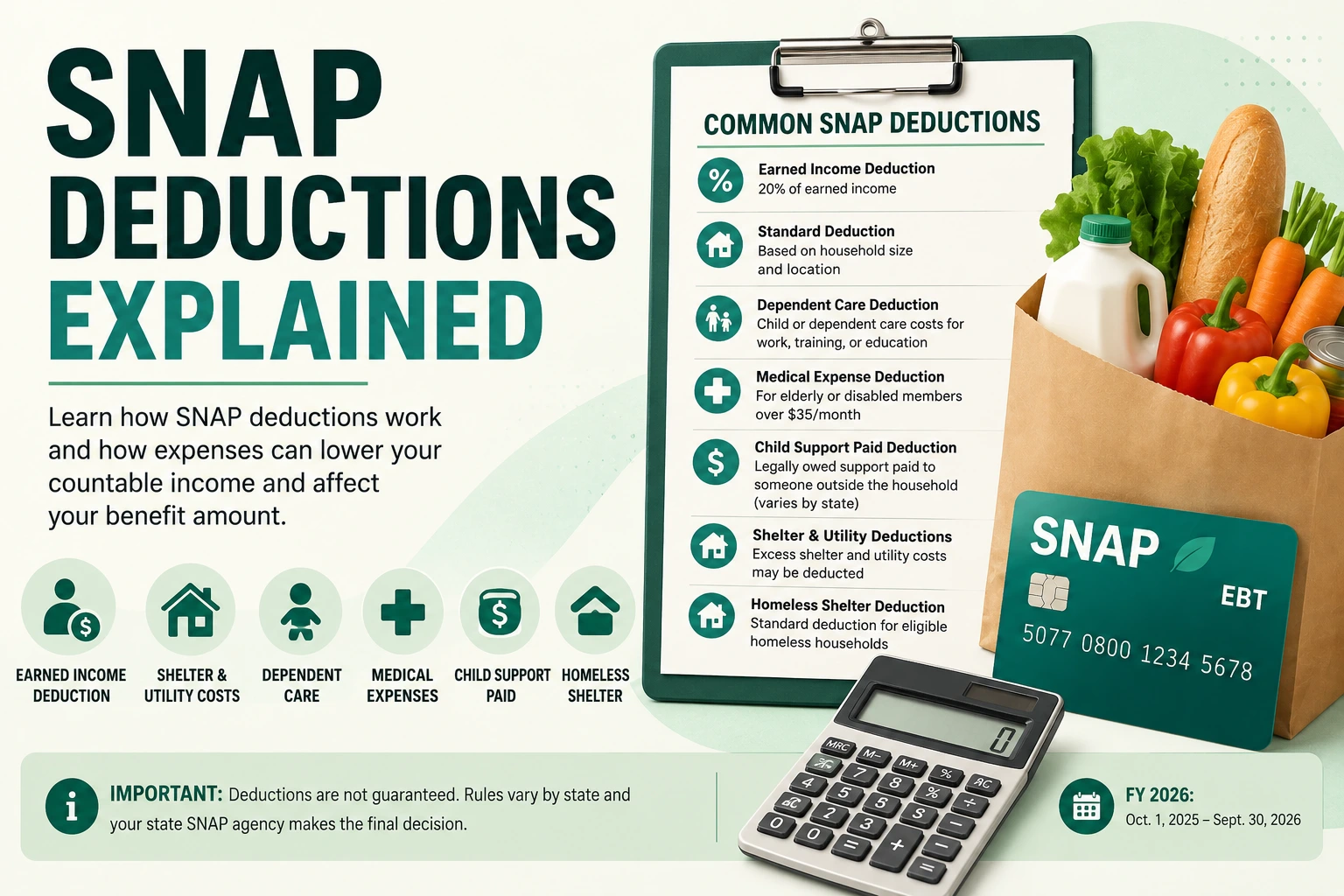
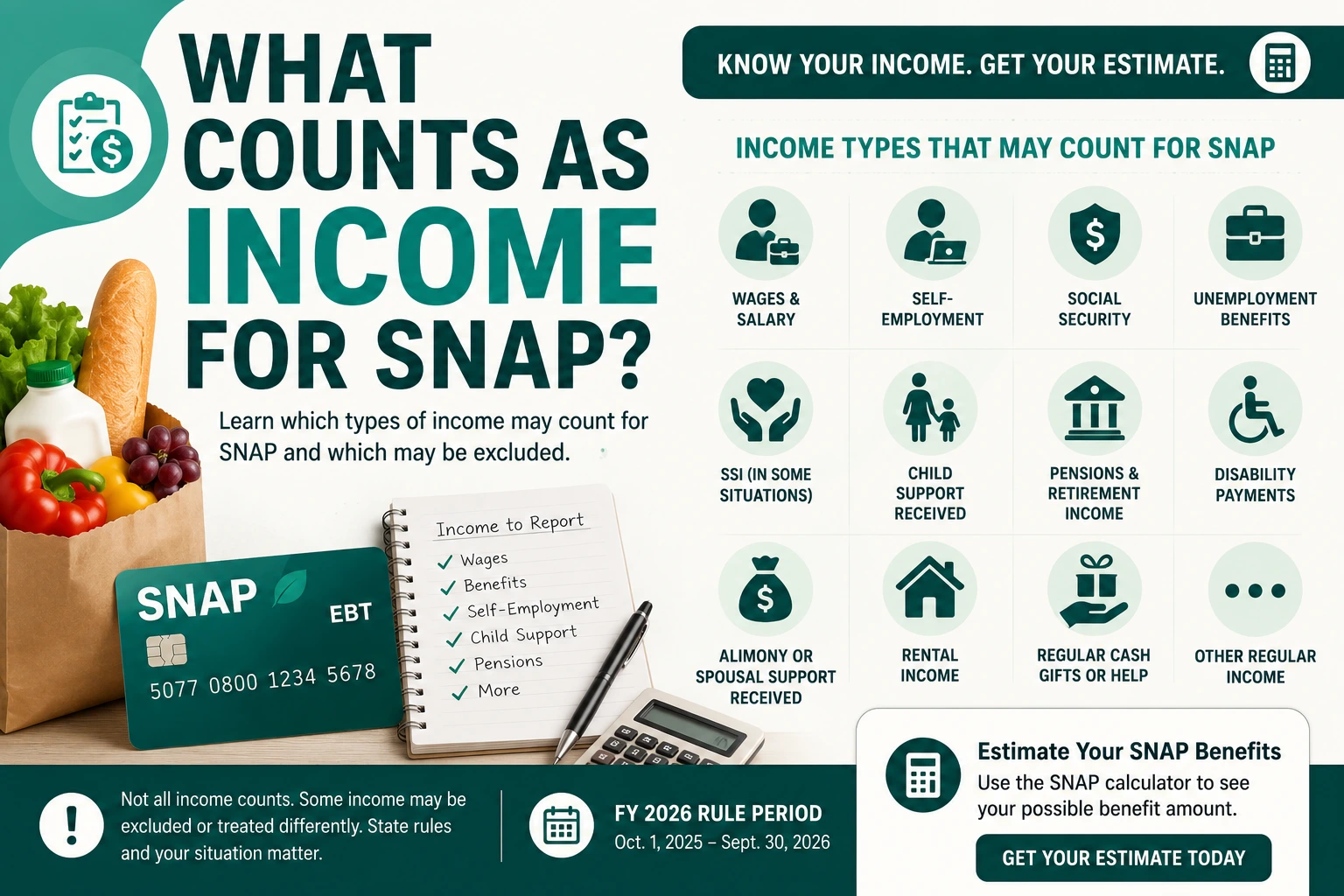
Use these SNAP guides to understand income limits, maximum benefit amounts, deductions, and income rules before using the calculator.
Last reviewed: May 2026. Rule period used where applicable: FY 2026, Oct. 1, 2025 through Sept. 30, 2026.
Start With the Main SNAP Rules
These guides explain the rules that affect most SNAP estimates. Start here if you want to understand why an estimate changes when you enter income, expenses, household size, or state details.
More SNAP Guides Coming Soon
Additional guides about household size rules, work requirements, student rules, and EBT cards will be added after they are reviewed and published.
How These Guides Support the SNAP Calculator
The calculator uses household size, income, expenses, deductions, state selection, and special household details to produce an estimate. These guides explain the major rules behind those fields.
Income affects eligibility
Gross and net income limits help screen whether a household may qualify. Income also affects the estimated benefit amount.
Deductions affect net income
Shelter costs, utilities, child care, child support paid, and medical expenses for elderly or disabled members may reduce countable income when allowed.
State rules still matter
SNAP is administered by state agencies, so application portals, EBT cards, utility allowances, reporting rules, and verification steps can differ by state.
Find Your State SNAP Calculator
Each state page includes state-specific program details, application resources, EBT card information, official sources, and a locked calculator for that state.
Use the state directory to open your state’s calculator page before entering income and expenses. This helps the estimate use the correct state selection and state-specific notes where available.